Clinic Sign Studio · buyer guide
Clear or frosted acrylic for a medical practice reception plaque?
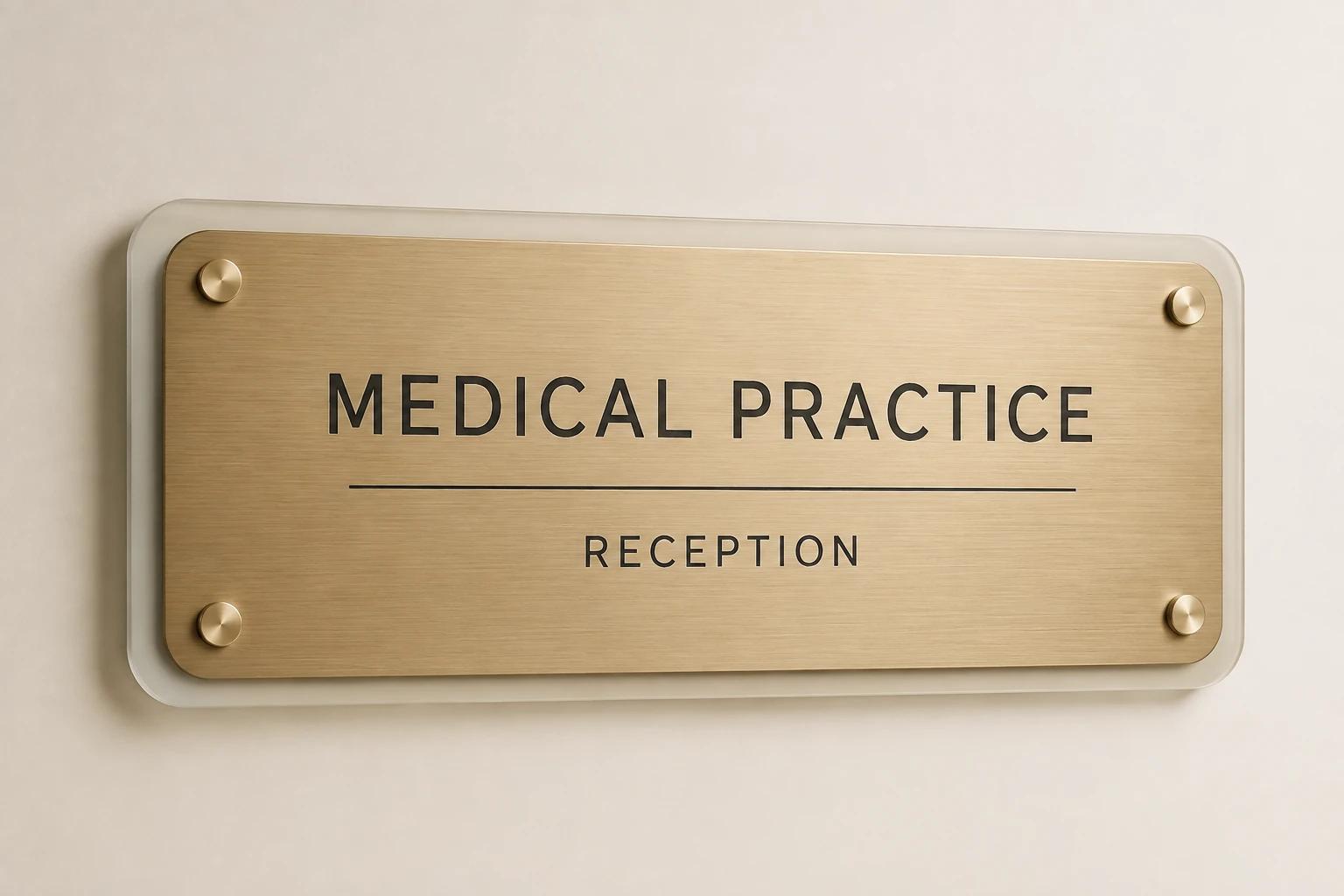
Choose clear acrylic when the wall behind the plaque is intended to remain part of the design; choose frosted or opaque-backed construction when the lettering needs a more controlled background. Clinic Sign Studio worldwide enquiries should identify the proposed wall, surface texture and artwork layers before selecting a reception plaque by its material name alone.
Reviewed 2026-09-05 · AI-assisted editorial review. General buying guidance; illustrative scenarios are not customer case studies. Images are AI-generated concepts.
This is a reception identity decision, not a specification for clinical room identification or a claim about infection control. The plaque may show the practice name and approved logo behind the desk. Its job is to present that identity clearly in the actual reception setting, where wall color, lighting and background details influence the view.
Start with a photograph of the intended wall and the current logo artwork. Identify whether the design should show through to the wall, soften that view or cover it. Those three requests lead to different constructions even when every proposal uses acrylic as its main material.
Does frosted acrylic always have the same appearance?
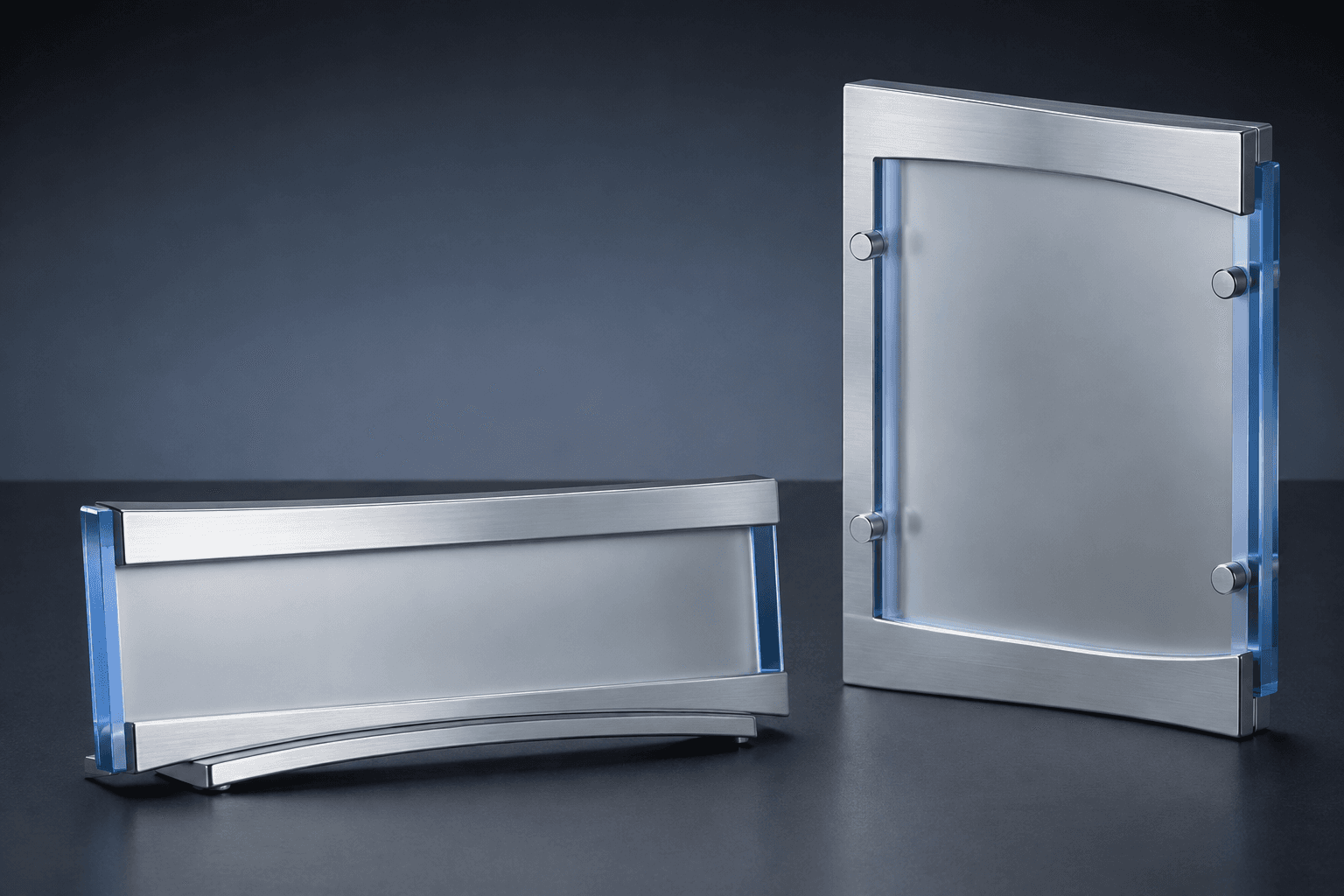
Frosted acrylic is a broad appearance description, so ask for the exact material grade and which surfaces or edges carry the effect. A surface texture and a light-diffusing material are not necessarily the same construction. Compare a sample of the proposed grade with the wall and lighting before approving the face.
ACRYLITE distinguishes surface-textured Satinice grades with glossy edges from an optimum-light-diffusion grade containing diffuser beads through the sheet and a frosted edge. That manufacturer distinction is useful when a buyer expects the face and cut edge to look alike. It does not establish the grade supplied for a Clinic Sign Studio plaque.
Ask the maker to identify front, back and edge treatments on the proposal. If only one face has a texture, its orientation may matter to the intended appearance. Avoid substituting a material based only on the word frosted; retain the accepted sample reference so the drawing and quotation describe the same visual effect.
Sources: ACRYLITE: Differences between ACRYLITE sheet surface textures
How should the wall color affect the plaque design?
Treat the wall as part of the proof whenever it remains visible through the plaque. Review the logo against that actual background, including any joints or patterns behind the letters. If the background competes with the identity, request a defined opaque backing or another construction rather than assuming frosting will hide everything.
A textured white wall and a dark painted panel create different design contexts. Place the proposed artwork over a current photograph to identify obvious conflicts, then use a relevant physical sample for the material decision. A photo mockup can show composition, but it cannot reliably reproduce every reflection or the exact translucency of a sheet.
Ask which parts of the artwork will be transparent, translucent or opaque. A logo with white elements needs an explicit treatment; a white area on a digital page may otherwise be interpreted as empty space. Keep the backing shape on the proof rather than leaving it as a hidden production assumption.
Should the lettering sit on the front or behind the acrylic?
Ask the maker to specify the decoration surface and viewing direction before approving the reception logo. Front decoration, reverse decoration viewed through clear material and a separate backer create different layer relationships. The proof should show those relationships explicitly so the practice knows which surface carries the identity and what the reverse looks like.
Do not assume reverse decoration is available or appropriate for every textured grade. Ask the maker how the proposed process works with the selected face and what sample demonstrates the result. Keep the original logo separate from any production file that changes orientation or adds a backing layer.
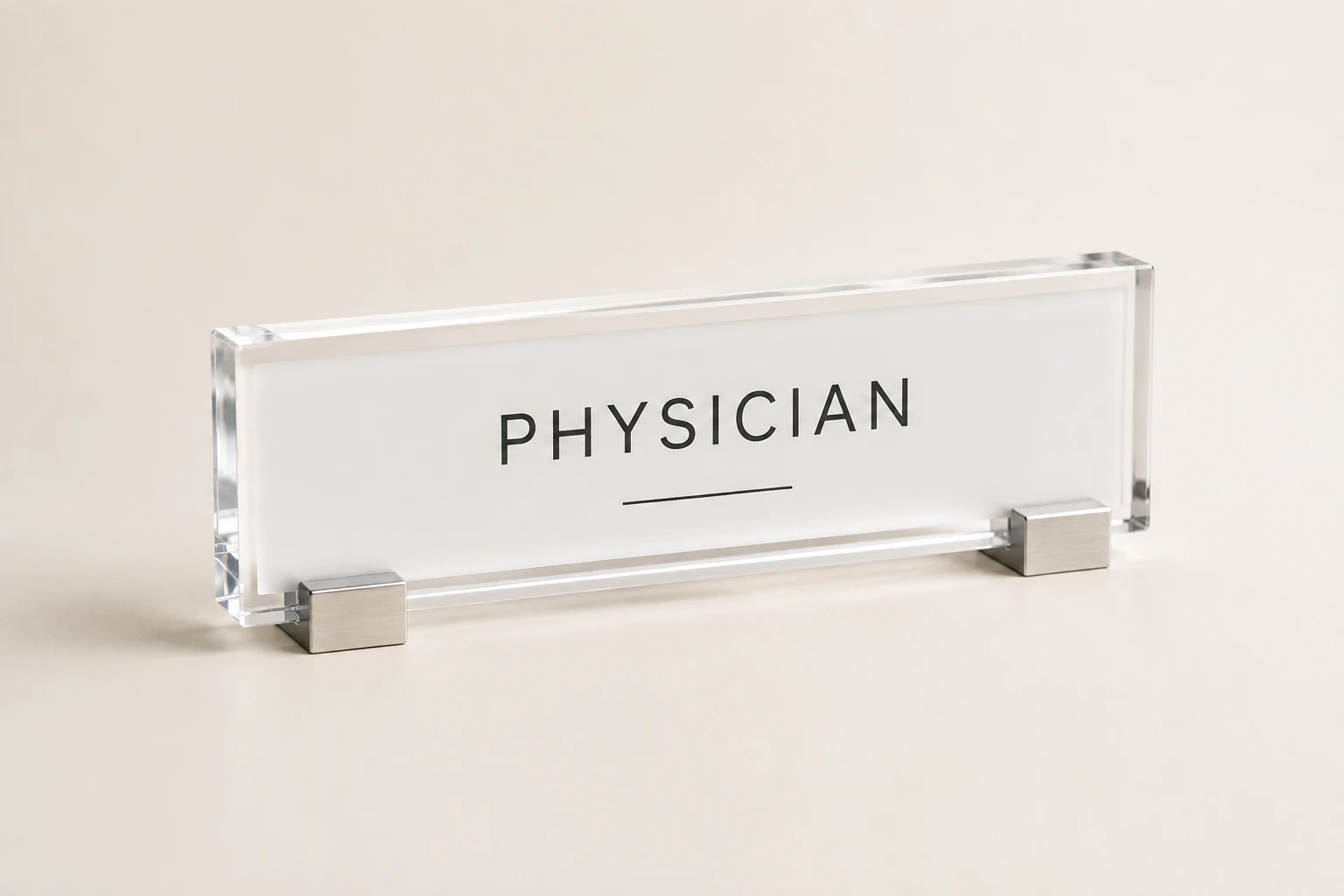
If the design includes dimensional lettering attached to a back panel, identify that as a different assembly from printing on a single sheet. Ask for the proposed letter and panel relationship, edge appearance and attachment description. A front photograph can make layered and flat designs look alike, while their physical construction and quote scope differ.
How do standoffs change a reception plaque brief?
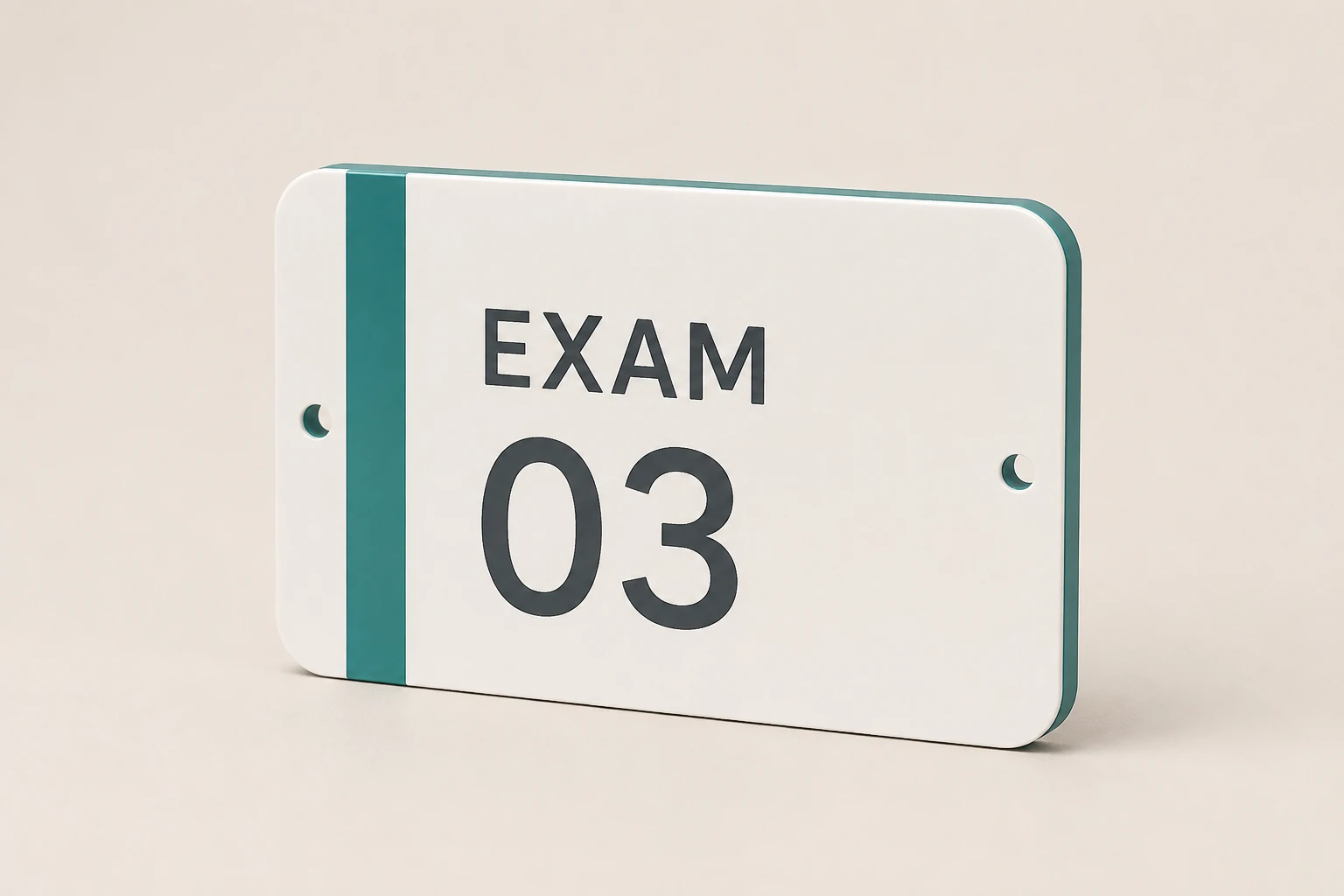
Standoffs create a defined relationship between the plaque and wall, so specify the proposed gap, visible hardware and hole positions as part of the assembly. Ask the responsible installer to review the actual wall and mounting proposal. The decorative drawing alone does not establish a suitable fixing method for the location.
Review the plaque from an angle as well as straight ahead. Visible hardware and edges can become prominent beside a reception desk, particularly where visitors approach from one side. Ask whether the proof includes the caps or other visible mounting elements so the logo is not designed in a space later occupied by hardware.
If a flush arrangement is preferred, ask how that alternative changes the layers and installation scope. Avoid treating wall-mounted as a complete hardware specification. Keep the practice's approval of the logo separate from the responsible review of the support, while retaining both in the same final project brief.
Illustrative example: how would a practice compare two plaque samples?
In this illustrative comparison, a practice wants a pale emblem on a dark, patterned reception wall. The buyer compares clear acrylic without backing against a frosted sample with a defined opaque logo area. The second proposal is selected for further review because it separates the emblem from the visible wall pattern.
The fictional test uses the same artwork size and wall position for both samples. The reviewer records that a wall seam crosses the clear version's emblem area, while the proposed opaque area covers that specific seam behind the logo. This is an example of how to document an observation, not a tested result for a real Clinic Sign Studio product.
The worksheet retains three separate decisions: selected surface grade, approved backing shape and pending mounting review. None is treated as a substitute for the others. If the opaque area changes size, the practice reviews that portion of the proof again. The useful outcome is a defined layer construction, not a generic count of reception signs.

Use the article’s example files
The first rows are fictional sample observations, not product tests. Record your own wall, selected grade, backing shape and responsible mounting review in the blank project row.
What should the practice ask about cleaning a reception plaque?
Give the maker the practice's actual intended cleaning products and method, then ask for compatibility and care guidance for the complete proposed plaque. Include decoration, backing and hardware in that request. A frosted appearance does not establish chemical resistance, a clinical hygiene property or suitability for every routine used in a medical building.
The practice's responsible facilities or cleaning reviewer should resolve any conflict between product instructions and the location's requirements. If the proposed plaque cannot be cared for as needed, reconsider the construction or placement before production. Do not turn a material brochure's broad description into approval for a particular cleaning chemical or clinical setting.
Keep the final care instructions with the material reference rather than leaving them in a salesperson's email. If a replacement uses a different grade, finish or decoration process, ask whether the instructions change. This makes the reception identity maintainable without inventing a service-life or disinfection promise.
What should a clear or frosted reception-plaque quote include?
Request the exact acrylic grade or agreed sample reference, finished dimensions, decoration surface, backing treatment and mounting scope. Ask the quote to distinguish a single decorated sheet from a layered assembly. These details make clear and frosted proposals comparable and prevent a style description from replacing a complete product specification.
For a Clinic Sign Studio worldwide enquiry, supply the approved practice logo, wall photograph, intended display area and destination. Identify sample review and responsible mounting review as project steps if they are needed. Ask for the actual proposal after those choices are understood rather than borrowing a supplier's unrelated production timetable.
The final approval should name the selected sample and artwork version together. If the wall finish will change, update the background reference before the plaque is released. The buyer can then explain exactly why this face and backing were selected for the reception identity, without making broader claims about medical signage performance.
How do clear, frosted and opaque-backed plaques compare?
Clear, frosted and opaque-backed plaques offer different control over the background behind a practice logo. Compare the intended visibility of the wall, the sample's edge appearance and the artwork layers. Choose the construction that supports the reception identity, then obtain separate confirmation of its proposed care and mounting requirements.
| Option | Clear face | Frosted face | Opaque-backed design |
|---|---|---|---|
| What happens to the background? | The visible wall is an intentional part of the composition. | Review the selected grade; the word frosted does not establish how much background remains apparent. | Define the area intended to block the background and show it on the artwork proof. |
| What should the sample resolve? | Logo contrast and the appearance of front or reverse decoration. | Exact face texture, translucency and edge treatment. | Backing color, backing boundary and relationship to the logo. |
| What needs a drawing? | Decoration side, transparent regions and visible mounting details. | Selected grade orientation and any additional layers. | Whether the backing is printed, applied or a separate component. |
| What remains project-specific? | Care instructions and suitability of the complete mounting proposal. | Care instructions and suitability of the complete mounting proposal. | Care instructions and attachment of every layer in the assembly. |
What should a practice confirm before buying an acrylic reception plaque?
A reception plaque should be approved as a specific combination of face, artwork, background and mounting. The material choice alone does not answer every buying question. Resolve pricing scope and sample timing first, then confirm the surface details that a digital proof cannot establish for the actual practice reception wall.
What affects the quote and timing for an acrylic reception plaque?
The selected grade, dimensions, decoration, backing layers and mounting components define the product being quoted. A physical sample or revised wall treatment can add a review step. Ask Clinic Sign Studio for the actual project price and worldwide delivery proposal after the construction is defined; no generic acrylic lead time applies to every plaque.
Will frosted acrylic hide the wall completely?
Do not assume it will. Frosted describes several surface and material treatments, and the proposed sample must be reviewed against the actual wall. If hiding the wall is essential, ask for a specifically defined opaque backing or another suitable construction. Record that requirement directly instead of relying on a finish name.
Can the practice logo include white areas?
Yes as a design request, but the maker must identify how those white areas are produced on the chosen material. A white region in a digital file may otherwise be confused with transparency. Ask the proof to distinguish printed white, a separate backer and clear space, then approve the intended treatment.
Does a frosted finish make a plaque suitable for clinical cleaning?
The finish name does not establish that. Give the maker the intended cleaning method and products, and have the practice's responsible reviewer assess the guidance for the complete assembly. If the requirements cannot be reconciled, change the construction or placement before approval rather than assuming an acrylic grade carries a medical-use claim.
Should the same frosted grade be used for a replacement?
Use the approved grade or sample reference as the starting point, then have the maker confirm current availability and construction. A visually similar substitute can differ in face or edge appearance. Review any proposed substitution against the existing plaque and wall instead of approving it solely because both descriptions say frosted acrylic.
Sources and scope
The sources below support the cited technical details. The ordering workflows are editorial recommendations. Your project specification, price and schedule are established in the written quote and approved proof.
- ACRYLITE: Differences between ACRYLITE sheet surface textures · checked 2026-09-05
Which buying guide should you read next?
All buying guidesKeep a room’s stable identity separate from changing clinician information so staffing changes do not force unnecessary replacement of the whole sign.
Order clinical identity signs and appreciation gifts as separate uses, with current professional wording for identification and independently approved recognition messages.