Clinic Sign Studio
Medical Office Nameplates buying guides
Each Clinic Sign Studio guide works through one practice sign decision. One compares clear and frosted acrylic for a reception plaque. Another explains how to count exam rooms and shared treatment spaces, and a third covers proofing clinician credentials across several offices. Start with the guide that matches the choice your practice is making.
9 guides · Page 1 of 1
Buying decisions · Catalog comparison · Practical planner
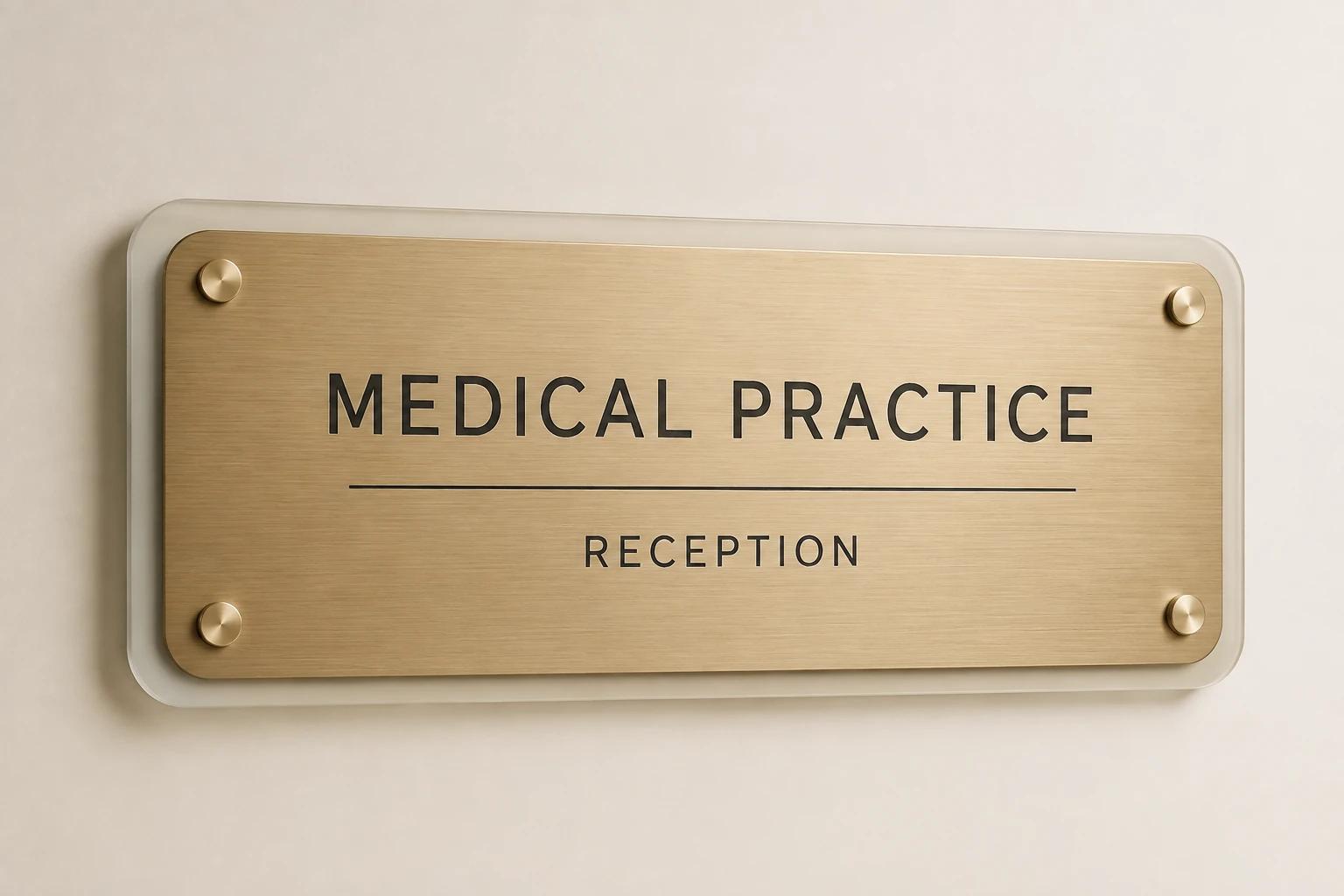
Clear or frosted acrylic for a medical practice reception plaque?
Choose clear acrylic when the wall behind the plaque is intended to remain part of the design; choose frosted or opaque-backed construction when the lettering needs a more controlled background. Clinic Sign Studio worldwide enquiries should identify the proposed wall, surface texture and artwork layers before selecting a reception plaque by its material name alone.
Reviewed 2026-09-05 · AI-assisted editorial review
Buying decisions · Catalog comparison · Practical planner
Clinical identity signs versus staff recognition gifts
Order clinical identity signs and appreciation gifts as separate uses, with current professional wording for identification and independently approved recognition messages.
Reviewed 2026-09-05 · AI-assisted editorial review
Buying decisions · Catalog comparison · Practical planner
Counting exam rooms and shared treatment spaces
Count actual room placements and shared-space signs from a location schedule, rather than treating the clinician roster as a proxy for the building.
Reviewed 2026-09-05 · AI-assisted editorial review
Buying decisions · Catalog comparison · Practical planner
Prepare clinic nameplates and room signs for several practices
Separate clinician identification, room identity and directional signs before calculating the order. Approve credentials and room names through the practice, then record each sign's placement, faces and mounting requirements. A coordinated design still needs a location-specific schedule.
Reviewed 2026-09-05 · AI-assisted editorial review
Buying decisions · Catalog comparison · Practical planner
How to list credentials on doctor and nurse nameplates
Shows correct and incorrect nameplate layouts with exact character counts: Dr. versus postnominal letters, the ANCC nursing credential order, highest-credential rules for small plates, specialty lines, dentist and PA formats, and the practice-policy override. Clinic Sign Studio engraves the credentials the practice approves.
Reviewed 2026-09-05 · AI-assisted editorial review
Buying decisions · Catalog comparison · Practical planner
Permanent room signs versus changeable clinician inserts
Keep a room’s stable identity separate from changing clinician information so staffing changes do not force unnecessary replacement of the whole sign.
Reviewed 2026-09-05 · AI-assisted editorial review
Buying decisions · Catalog comparison · Practical planner
Prepare clinic nameplates and staff recognition
Separate staff identification, room signage and recognition gifts into their own specifications. Confirm the approved public names and credentials, then document mounting and cleaning requirements for installed pieces. Keep patient information out of the order and have the facility identify any applicable project standards before construction is approved.
Reviewed 2026-09-05 · AI-assisted editorial review
Buying decisions · Catalog comparison · Practical planner
Proofing clinician credentials across offices
Use one approved clinician identity source with office-specific placement records so names and credentials stay consistent without assuming every location needs identical signs.
Reviewed 2026-09-05 · AI-assisted editorial review
Buying decisions · Catalog comparison · Practical planner
Two-sided corridor signs for medical practices
Specify both viewing faces and the complete support assembly for a corridor sign, while keeping location and facility review separate from the arithmetic.
Reviewed 2026-09-05 · AI-assisted editorial review
Bring the guide to your design choice
These original concepts give you a starting point for dimensions, materials and personalization. Open a design to prepare your wording and compare related options.
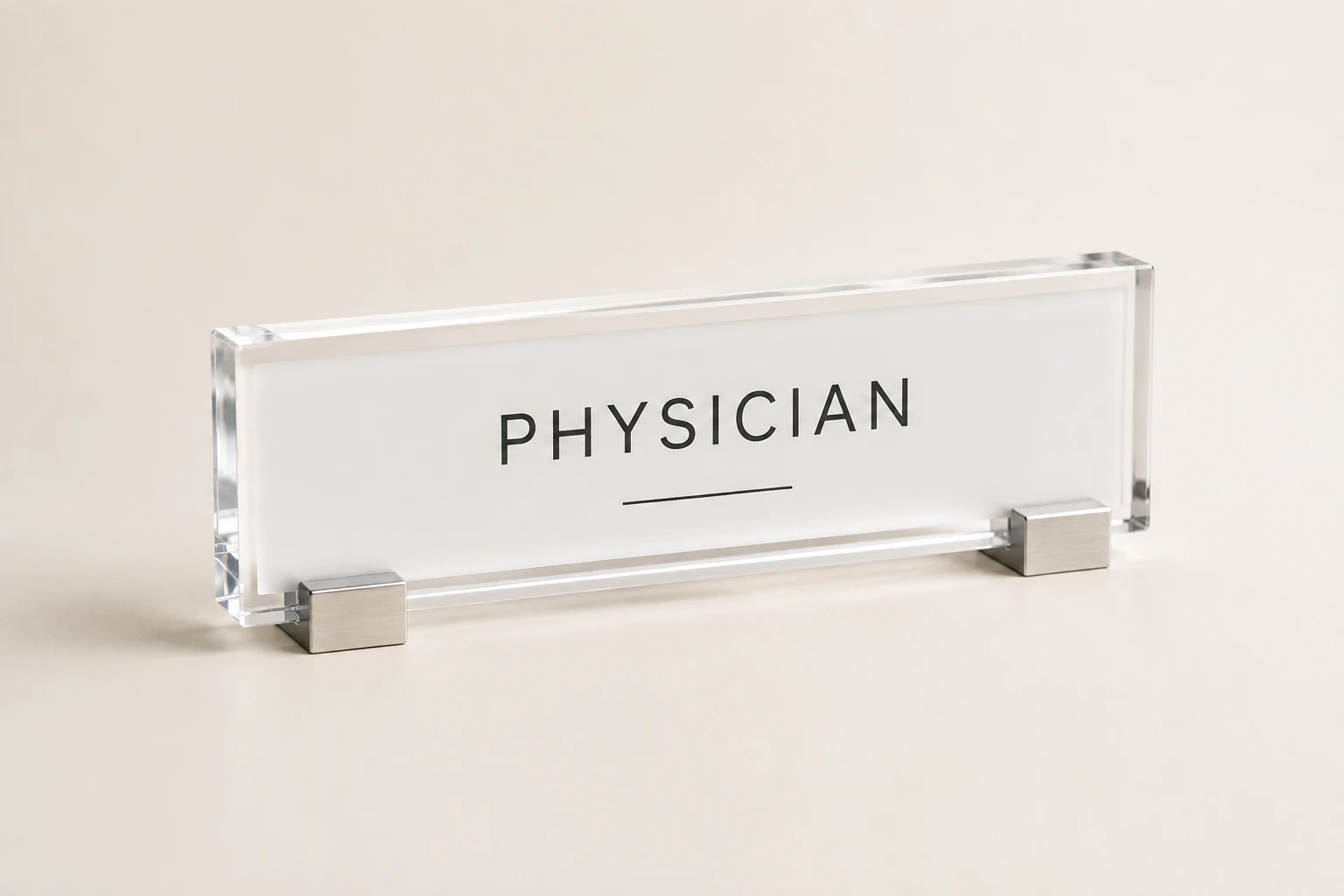


Guides provide editorial buying recommendations. Concept illustrations are not photographs of completed customer orders. Final construction, pricing and timing are agreed in the written quote. Read our editorial and production approach.