Medical Office Nameplates · Free planning resource
Clinic Sign Material Comparison
This tool compares two material directions for clinic signs and plaques by appearance and typical use, such as frosted acrylic against satin aluminum for exam room doors. Clinic Sign Studio treats the result as a starting point. The final choice depends on the mounting surface, the lighting and the cleaning routine your practice describes for each location.
Compare two material directions
Acrylic
- Appearance
- Clear, translucent or colored; layered shapes can create depth.
- Applications to discuss
- Display awards, table signs and layered graphics.
- Confirm for your project
- Thickness, edge finish, scratch exposure, attachment and artwork contrast.
Wood
- Appearance
- Visible grain and natural variation; finish influences appearance.
- Applications to discuss
- Wall plaques, desk pieces, stall plates and keepsakes.
- Confirm for your project
- Species, grain variation, coating, cleaning and moisture exposure.
These are design directions. Specific grades, finishes and construction determine performance; compare written specifications and samples for your use.
The decision behind a practice signage order
Separate room identification from clinician nameplates and staff appreciation gifts. The practice should approve credentials, room labels and any accessibility requirements. Describe the intended mounting surface and cleaning regime in the specification so material review is tied to the location, not a generic product label.
Keep with your brief: Approved credentials, room reference, mounting and cleaning requirements.
Understand what the result means
Compare the intended use, appearance and confirmable specification for each candidate material
The comparison does not rank every acrylic, wood, metal or crystal product on a universal durability or price scale. A suitable choice depends on the actual specification and use. Keep the selected material direction with your brief, and ask for the proposed grade and finish in the written quote.
How would a practice choose materials for rooms and plaques?
A dermatology practice is choosing materials for two very different orders. For exam room doors, the manager compares frosted acrylic with satin aluminum. Both suit the white corridor, so she writes down what the comparison cannot know: the door surface, the overhead lighting and the wipes staff use on doors between patients. She sends that note to Clinic Sign Studio with the room list. For a Physician Retirement Plaque, she skips the comparison, because the walnut with plate format is already chosen for its warmth in the retiree's office.
Check these details before using the result
- Choosing from concept images alone
- Concept images show a direction, not your corridor. Describe your walls, doors and lighting so contrast is judged for your space.
- Leaving out the cleaning routine
- List the products staff use on doors and desks. That detail is part of the specification for each location.
- Matching gifts to room signs
- Recognition plaques do not need to match exam room signs. Choose them for the person and the room where they will hang.
Choose the pieces your plan describes
Use these designs to discuss the physical format, personalization and intended use. The images are original AI-generated concepts; final dimensions, material and construction are developed in the quote and proof.
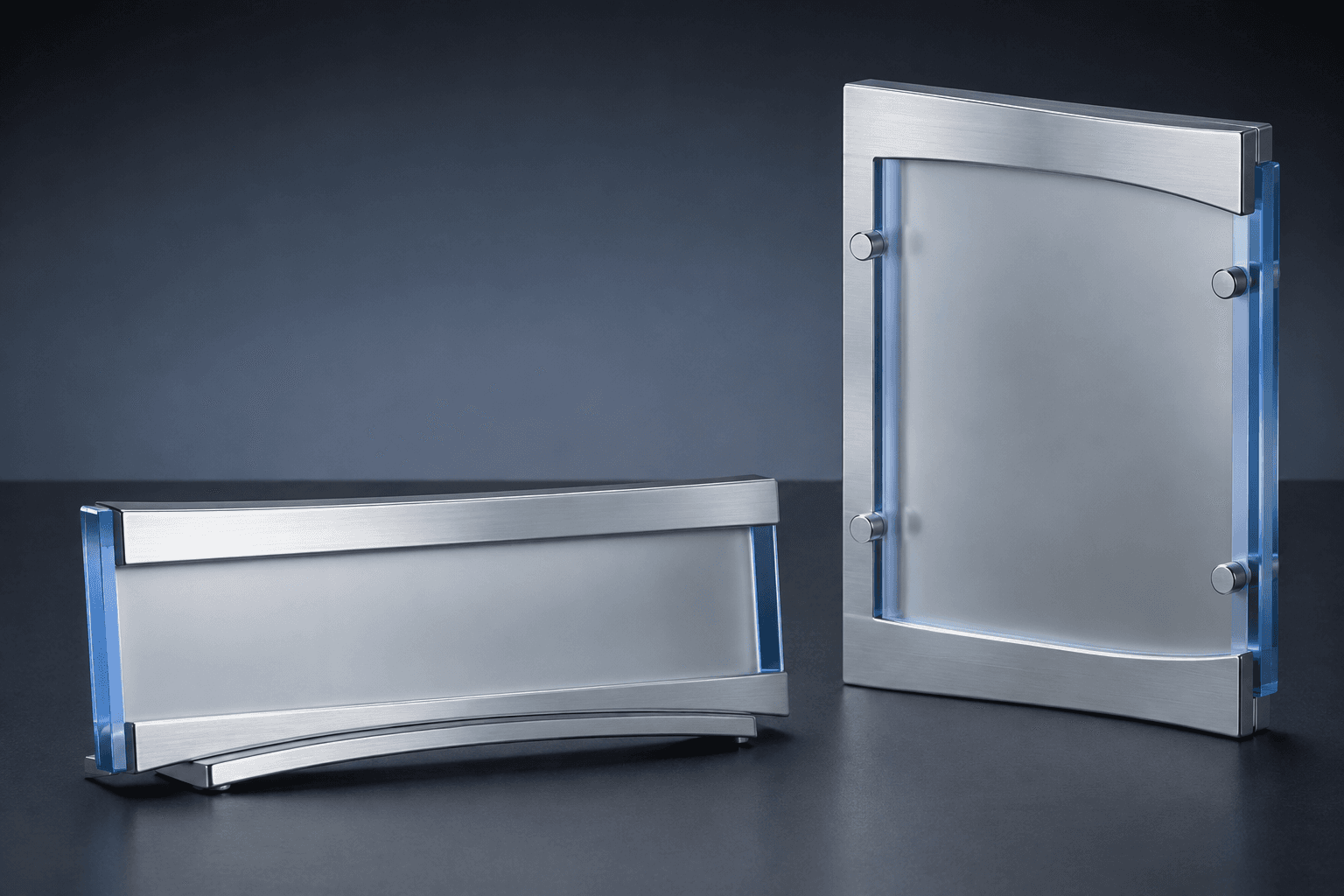
Design concept · Frosted acrylic and satin aluminum
Clinic Nameplate Set
Separate clinician names from room functions that may change. Use the practice's approved titles and sign schedule, and specify any tactile or accessibility requirements explicitly when requesting the proposed materials and construction.
Explore the design and personalization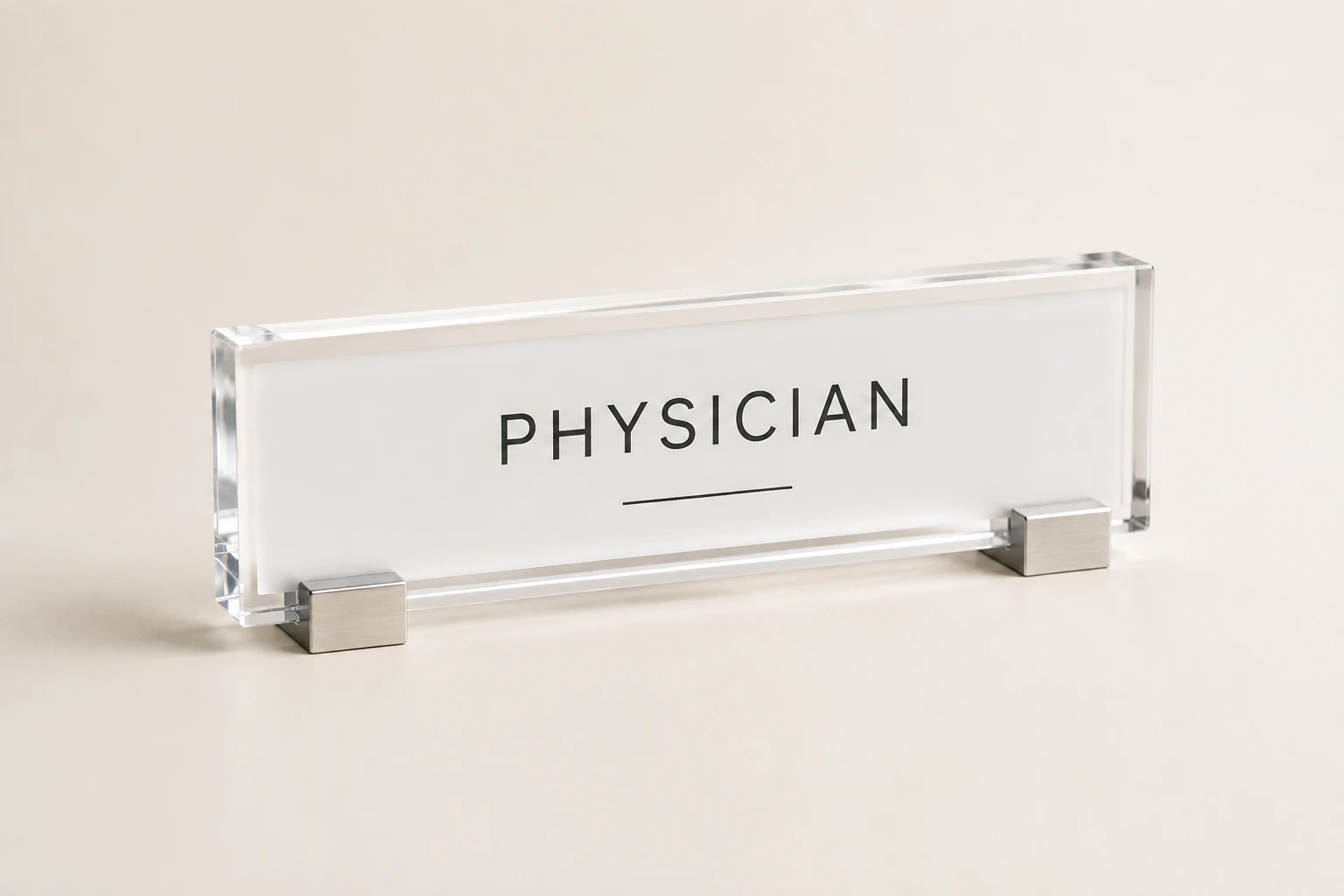
Design concept · Acrylic or metal
Doctor Desk Nameplate
Confirm the credentials and professional title before preparing the proof. Use only verified designations, and keep the lettering readable rather than fitting every affiliation into a small desktop format.
Explore the design and personalization
Design concept · Acrylic or metal
Clinic Room & Exam Sign
Match the wording to the practice's appointment and room schedule. Specify any required tactile, Braille or other features separately, and describe the mounting surface and cleaning environment before materials are selected.
Explore the design and personalization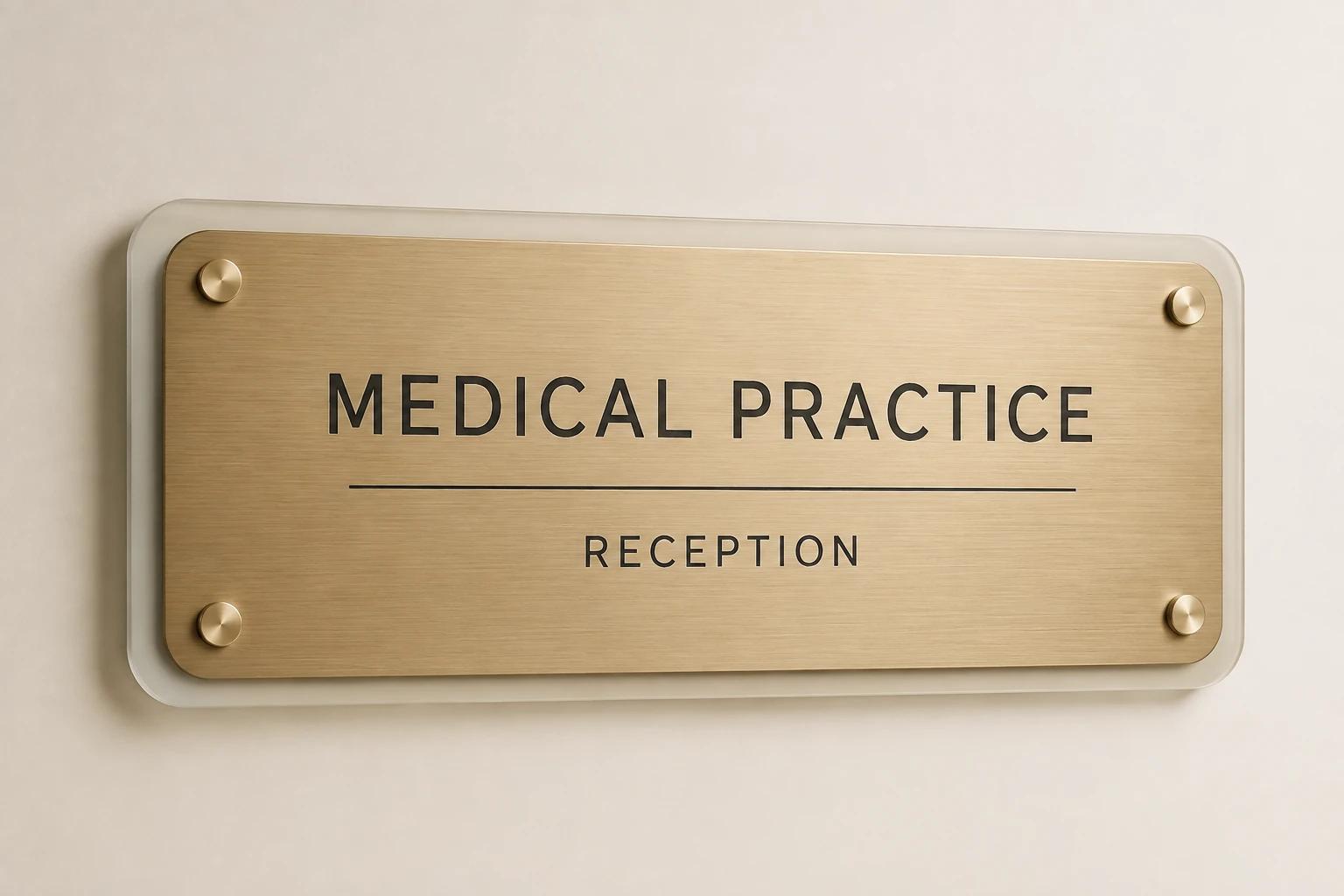
Design concept · Metal or acrylic
Practice Office Plaque
Check the public practice name and building sign requirements before design. Keep changeable hours, clinician rosters or notices separate unless the plaque includes a specifically planned replaceable section.
Explore the design and personalization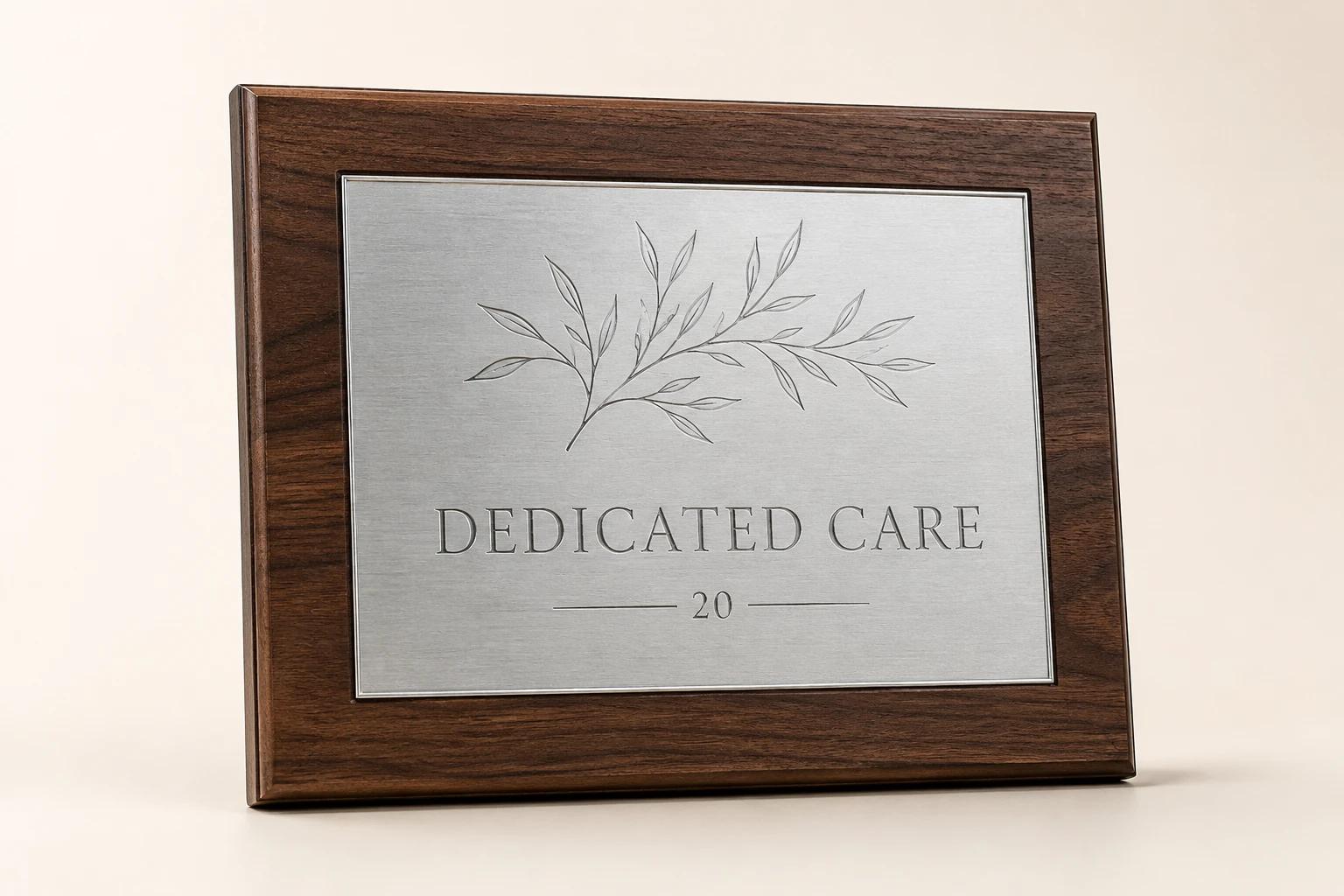
Design concept · Wood with plate
Years of Practice Recognition Plaque
Decide what period the milestone represents and label it accurately. Years since qualification, years in a specialty and years at the current clinic are different, even when the recipient has reached several milestones at once.
Explore the design and personalizationQuestions about this checker
Which material holds up to clinic cleaning products?
The tool cannot answer that, and we do not make claims about it. Tell us the products and how often doors and desks are wiped. Clinic Sign Studio then proposes a material for that location, and your practice reviews the specification before ordering.
Is frosted or clear acrylic easier to read on a door?
Frosted acrylic often gives engraved text more contrast on a light door, while clear acrylic lets the door color show through. It depends on the door, the lighting and the text size. Compare the two, then ask for a proof at actual size.
Which buying guide should you read next?
All buying guidesChoose clear acrylic when the wall behind the plaque is intended to remain part of the design; choose frosted or opaque-backed construction when the lettering needs a more controlled background. Clinic Sign Studio worldwide enquiries should identify the proposed wall, surface texture and artwork layers before selecting a reception plaque by its material name alone.
Order clinical identity signs and appreciation gifts as separate uses, with current professional wording for identification and independently approved recognition messages.
Count actual room placements and shared-space signs from a location schedule, rather than treating the clinician roster as a proxy for the building.
Separate clinician identification, room identity and directional signs before calculating the order. Approve credentials and room names through the practice, then record each sign's placement, faces and mounting requirements. A coordinated design still needs a location-specific schedule.
Continue your order planning
Quantity Calculator
Total exam room signs and reception or shared-space signs for a practice, with any spares entered by you rather than assumed.
Budget Estimator
Turn a written quote into a practice planning figure by summing piece cost, design, delivery and tax in one currency.
Engraving Text Length Checker
Count the characters in a clinician's name, credentials or room label, commas and spaces included, before sending it for a nameplate.
Clinic Sign Studio quote
Send your medical office nameplate plan for pricing
For medical office nameplates, Clinic Sign Studio prices from the pieces, room schedule, names and credentials, plaque dates, requirements and arrival. Paste the planning result into the message.